Re-Flux Medical envisions a world where peripheral artery disease is easily and reliably diagnosed, regardless of where a patient lives or which hospital they walk into. By replacing conventional diagnostic methods with an efficient, patient-forward imaging device, Re-Flux Medical aims to cut the time between symptom and treatment at every stage of care – saving lives and limbs.
As continuous peripheral blood flow monitoring becomes part of routine care, physicians will be able to catch disease progression before it becomes a crisis, and patients will spend less time waiting and more time acting—turning PAD from a condition too often caught too late into one that’s managed proactively, at every stage.
Logan Merriam is a biomedical and chemical engineering student at the South Dakota School of Mines. With over three years of technical experience spanning both academic research and industry, his expertise spans design, testing, and development, as well as analytical problem-solving and communicating complex concepts clearly.
Christopher Tuckerman is a biomedical engineering graduate of the South Dakota School of Mines. With a diverse background spanning medical device development, cell culturing, and 3D modeling, he brings a sharp eye for examining problems from unconventional angles and finding insights others miss.
Drake Van Steenwyk is a biomedical engineering graduate student at the South Dakota School of Mines. As the team’s technical lead, his expertise spans electronics, embedded and scientific coding, and medical device development, with a strong mathematical foundation in PDEs, linear algebra, and finite element analysis that underpins the company’s core technology.
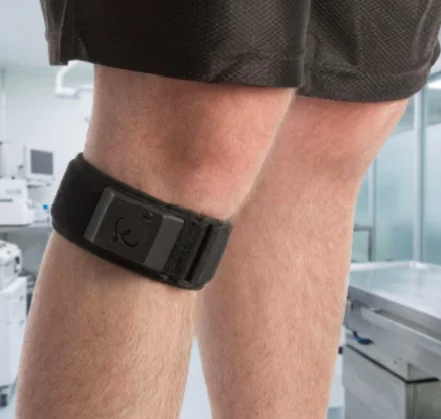
The Re-Flux EIT is a compact electrical impedance tomography device that fits comfortably around the patient’s lower leg. Once in place, it injects small electrical currents into the leg and measures the resulting tissue resistance to detect the presence and severity of an occlusion, as well as the resulting blood flow.
The Re-Flux EIT’s non-invasive, efficient, compact design allows for fast, accurate diagnosis of peripheral artery disease without ionizing radiation, contrast dye, or an overburdened specialist — enabling quicker treatment to save lives and limbs.